adimem
  • Home  :
  • Products :
  • Food Color & Lake Colors

Food Color & Lake Colors

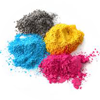
  • Vipul Organics Food color & Lake colors are produced by an FDA India Certified factory. Our Colors are also approved in USA & Mexico. Along with the regular colors, we manufacture popular blends such as Tomato Red, Mint Green, Apple Green, Toffy Brown, etc. We can also produce the blends as per the requirement of the customers.

    We produce both water-soluble as well as water insoluble Colors.

    Our Aluminum Lake Colors are Pigment Powders or Disperse, prepared from colors and Aluminum Hydrate or other approved substrates. Micron Technologies helps to achieve greater product effectiveness through the application of particle size. They are cheerful, bright in shade, available in a variety of Dye strengths and have an excellent color stability and consistency.

  • Properties of Lake Colours:

    In general, Lakes or disperse colors are very fine powder that have Fastness to Light, Resist Air and Moisture, Are Insoluble in Water, Alcohols and Organic Solvents. This helps to increase the shelf life of the end product.

    FASTNESS TO LIGHT

    As Colors are bonded with Aluminum Hydrate, the rate of Discoloration is reduced in comparison to the Parent Dye. This helps to prevent fading of Colors in end product.

    OPACITY OR HIDING POWER

    Lake Colors are opaque and dispersible. This helps to cover any surface with low quantity of Lake Colors.

    SHADE OR TINT

    Lake Colors produces different tint or shade with different strength of parent Colors. This tint or shade remains constant on applying any number of coatings. This quality of consistency helps to reproduce same shade from batch to batch.

    MOTTLING OR SPOT

    As Lake Colors are insoluble in water; the migration of colors is prevented. This helps to prevent mottling or spots on product. Such qualities of Lake Colors have excellent advantage over the parent.

  • Application

    • Pharmaceuticals
    • Cosmetics
    • Plastics
    • Packaging
    • Foodstuff
    • Pigments
    • Dyes industry
  • Packing

    Colors are available in the packing of 25 kg / 50 kg Brand New Plastic Drums / Carton Boxes / Iron Drums.

  • Sr. No.
  • Generic Names
  • C.I. No.
  • 01
  • Tatrazine
  • Yellow 5
  • 02
  • Sunset Yellow
  • Yellow 6
  • 03
  • Quinoline Yellow
  • Yellow 13
  • 04
  • Amaranth
  • Red 2
  • 05
  • Carmoisine
  • Red 3
  • 06
  • Fast Red E
  • Red 4
  • 07
  • Ponceau 4R
  • Red 7
  • 08
  • Red 2 G
  • Red 10
  • 09
  • Erythrosine
  • Red 14
  • 10
  • Allura Red
  • Red 40
  • 11
  • Brilliant Blue FCF
  • Blue 2
  • 12
  • Indigo Carmine
  • Blue 2
  • 13
  • Brown HT
  • Brown 3
  • 14
  • Black PN
  • Black 1
  • 15
  • Fast Green FCF
  • Green 3
  • 16
  • Mint Green
  • Mixture
  • 17
  • Apple Green
  • Mixture
  • 18
  • Toffy Brown
  • Mixture

FREQUENTLY ASKED QUESTIONS

Approved food colors vary by country but commonly include Tartrazine (Yellow 5 / E102), Sunset Yellow FCF (Yellow 6 / E110), Quinoline Yellow (E104), Carmoisine (Red 3 / E122), Amaranth (E123), Ponceau 4R (E124), Erythrosine (Red 14 / E127), Allura Red AC (Red 40 / E129), Brilliant Blue FCF (Blue 1 / E133), Indigo Carmine (Blue 2 / E132), and Fast Green FCF. Each country's regulatory authority (FDA in the USA, EFSA in Europe, FSSAI in India) maintains an approved list with maximum permitted levels for each food category.
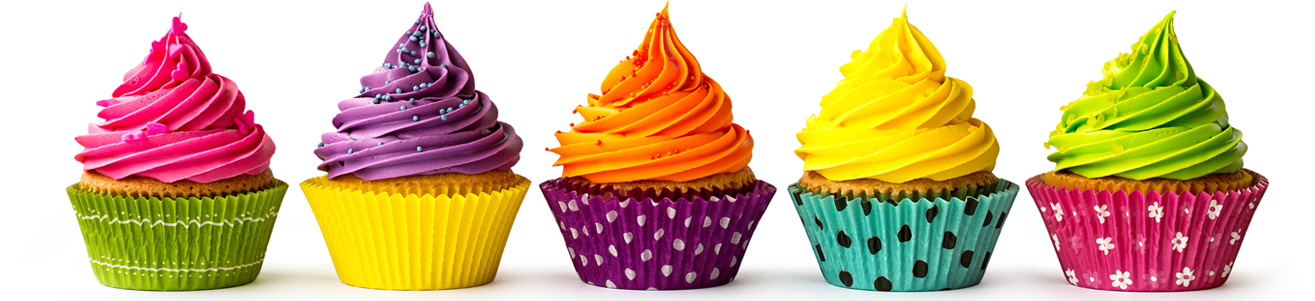
In confectionery, food colors are used to create appealing, recognisable shades in hard candies, gummies, marshmallows, chocolate coatings, icing, fondant, chewing gum, and lollipops. Water-soluble food dyes are used in products with a high moisture content or aqueous base, while Lake Colors (aluminum salts of food dyes) are preferred for fat-coated confectionery, candy shells, and sugar panning — where the insoluble lake pigment provides more stable, uniform colour that does not bleed or migrate.
In beverages, food colors are used to restore colour lost during processing, to standardise the appearance of natural fruit juices, and to make artificially flavoured drinks visually appealing and consistent. Water-soluble food dyes are dissolved directly in the beverage at very low concentrations. Key considerations for beverage colors include stability across a range of pH values (especially for carbonated and acidic drinks), stability under pasteurisation and UHT heat treatment, and compatibility with other ingredients such as vitamin C, which can degrade certain dyes.
Synthetic food colors (such as Tartrazine, Allura Red, Sunset Yellow, and Brilliant Blue) are manufactured through chemical synthesis and offer highly consistent shade, brightness, and stability. They are available at low cost and are approved at specific levels by regulatory bodies. Natural food colors are derived from plant, animal, or mineral sources (such as beetroot red, turmeric, spirulina blue, carmine from insects, and caramel). Natural colors are perceived as more 'clean label' by consumers but may have lower colour strength, less stability, and higher cost compared to synthetics.
India is a significant producer and exporter of food colors and lake colors to the global food, pharmaceutical, and cosmetics industries. Vipul Organics Ltd. (through its subsidiary Shree Ambika Naturals Pvt. Ltd.) is a leading food color and lake color manufacturer and supplier in India — certified by FDA India, ISO 9001:2008, Kosher, Halal, and GMP. Their SunLake® range includes all major synthetic food dyes and their lake forms, with exports to the USA, Mexico, Chile, Brazil, South Africa, Kenya, Japan, and other markets. Custom blends such as Tomato Red, Mint Green, and Apple Green are also available.